

Escribe, Nestor Díaz.
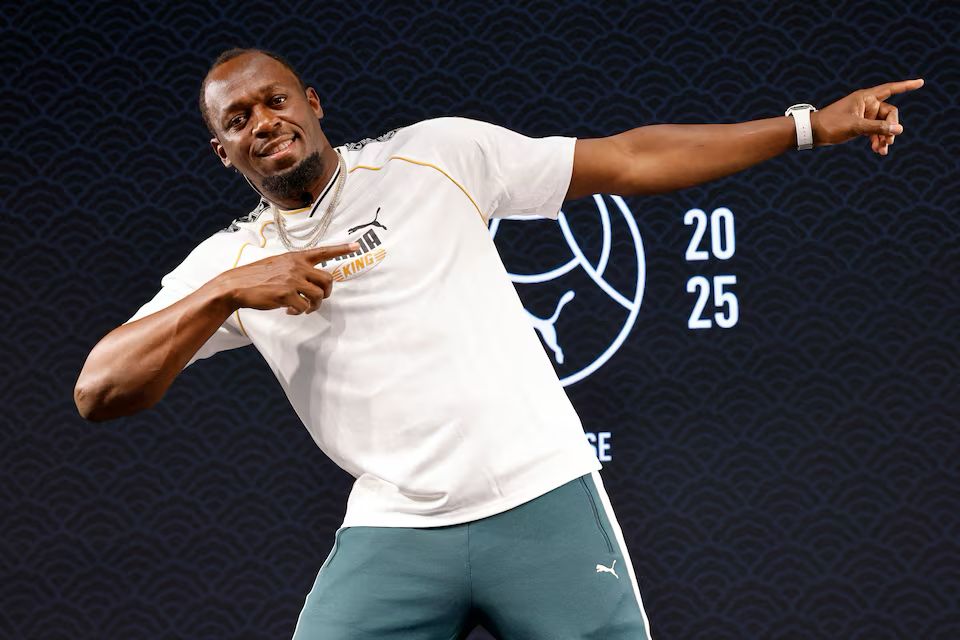
¿Te imaginas a un hombre superando en velocidad a un autobús? Con los pasajeros dentro del bus, perplejos ante un rayo que se les atraviesa por sus narices y al mismo tiempo aplauden ante tal sorprendente acción. Ese es Usain Bolt, el humano más rápido en la historia del deporte. El que traspasó las barreras de la vida y aprovechó los dones que Dios le obsequió. Sus carreras en las pistas de poliuretano y caucho son una fotografía de segundos con el lente bien puesto, por si se escapa la imagen. Aquella imagen a colores queda grabada para la eternidad, para las nuevas generaciones, la cual propala que una persona puede lograrlo todo si aprovecha sus capacidades. Sin importar el color de su piel. Bolt se sube al podio con once títulos mundiales y ocho olímpicos como velocista (2008-2016); además, cuenta con los récords mundiales de los 100 y 200 m lisos y la carrera de relevos 4×100 con el equipode la tierra que lo vio nacer (Jamaica).
Es una voz autorizada cuando se quiere erradicar el racismo de los estadios; su palabra le lleva miles de kilómetros de distancia a los carteles que se exponen antes de iniciar un partido de fútbol. “Para mí es triste que el racismo siga aquí. Creo que siempre le he dicho al mundo que necesitamos unirnos. Los deportistas solo queremos hacer feliz a la gente, siempre salimos a dar lo mejor de nosotros y nuestra intención es llevarle alegría a los fans, hacer que se diviertan, que haya una buena competición, porque eso es lo que quieren ver (). Así que es terrible saber que esto sigue sucediendo, y espero que pueda cambiar en los próximos años”. Declaró en una entrevista en el 2023, ante la ola de agresiones raciales a Vinícius Jr. en el Real Madrid, Lewis Hamilton en la Fórmula 1.
La discriminación por el color de piel es pan de cada día en los recintos deportivos del mundo; sin embargo, no se toman las medidas necesarias para mermar y soterrar tal actitud grosera, por decir lo menos. En los países desarrollados, los directivos del negocio, principalmente en el fútbol, captan con las múltiples cámaras que existen a los llamados “hinchas” y validan sus datos con las entidades correspondientes; para luego meterlos en el sistema y aplicar sanciones. Activan el protocolo al instante. Esto no es eficiente en naciones menos desarrolladas para desplazar con eficacia la segregación de las personas, ya que existe la corrupción regada como arena en las gradas. Parte también de la idiosincrasia. Por tanto, la solución general a mediano y largo plazo es la educación desde casa y las escuelas, aprender a valorar a nuestros semejantes tan igual como a nosotros, sin observar sus orígenes, su linaje.
Ante los hechos ocurridos, cuando los futbolistas de la selección inglesa fallaron en el tiro de los doce pasos, en la final de la Eurocopa 2020, frente a Italia; (agredidos en redes sociales por los fanáticos). El velocista jamaicano manifestó: “Puedes estar molesto con una persona por fallar porque somos humanos, pero si vas a incorporar la raza, entonces no tiene lugar en el fútbol o simplemente en general». Él utiliza su voz pública para disminuir este flagelo de la sociedad, que hoy convive con la información en sus dedos. A pesar de su carisma, Bolt también ha sido víctima de estas agresiones en menor grado que otros, por lo cual no escatima en pronunciarse con energía y zancadas largas como en sus carreras, ante la ola de “caricias” a este bicho que existe en el orbe. Se mantiene atento a “cómo se mueve el mar”, para dar con la meta y clavar un mensaje con jerarquía.
¿Acaso quieren que Bolt se pronuncie siempre para erradicar por completo tal discriminación? Que incluso se da entre los propios deportistas “profesionales”. Si la FIFA optara por “enviar al archivo este añejo libro”, la solución a corto plazo sería: no entra más tal hincha a un estadio o tal atleta no juega ningún partido más, es decir, colgaría los chimpunes de por vida.
La “galopada” con el autobús se dio en Buenos Aires, en la avenida 9 de Julio, en el lustre del 2013. Bolt cruzó la línea y el bus ni arrancaba. Se dice que la única vez que Usain «fue lento» en su vida aconteció cuando nació 10 días después de la fecha prevista del parto. ¡Centro al área y tú tienes el balón!
CENTER OF THE FIELD
Write, Nestor Diaz.
Usain Bolt and racism.
Can you imagine a man outrunning a bus? With the passengers inside the bus, perplexed by a flash of lightning passing right in front of them, yet applauding such an amazing feat. That’s Usain Bolt, the fastest human in the history of sports. He who broke through the barriers of life and took advantage of the gifts God gave him. His races on the polyurethane and rubber tracks are a snapshot of seconds with the lens well positioned, in case the image escapes. That colorful image is engraved for eternity, for new generations, spreading the message that a person can achieve anything if they take advantage of their abilities. No matter the color of their skin. Bolt takes the podium with eleven world titles and eight Olympic titles as a sprinter (2008-2016); he also holds the world records for the 100 and 200 m sprints and the 4×100 relay race with the team from the land where he was born (Jamaica).
He is an authoritative voice when it comes to eradicating racism from stadiums; his words carry thousands of miles away from the posters displayed before the start of a soccer game. «For me, it’s sad that racism is still here. I think I’ve always told the world that we need to unite. Athletes just want to make people happy. We always go out there to give our best, and our intention is to bring joy to the fans, to entertain them, to put on a good show, because that’s what they want to see. So it’s terrible to know that this is still happening, and I hope it can change in the coming years.» He said in an interview in 2023, in response to the wave of racial abuse directed at Vinícius Jr. at Real Madrid and Lewis Hamilton in Formula 1.
Discrimination based on skin color is commonplace in sports venues around the world; however, the necessary measures are not being taken to reduce and eradicate this rude attitude, to say the least. In developed countries, business executives, mainly in soccer, use multiple cameras to capture so-called “fans” and validate their data with the relevant authorities; they then enter this information into the system and apply sanctions. They activate the protocol instantly. This is not efficient in less developed nations to effectively displace the segregation of people, as corruption is as widespread as sand in the stands. It is also part of the idiosyncrasy. Therefore, the general solution in the medium and long term is education at home and in schools, learning to value our fellow human beings as equals, regardless of their origins or lineage.
In light of recent events, when the English national team players missed their penalty kicks in the Euro 2020 final against Italy, they were attacked on social media by fans. The Jamaican sprinter said: “You can be upset with a person for failing because we are human, but if you are going to bring race into it, then it has no place in soccer or in general.” He uses his public voice to reduce this scourge on society, which today coexists with information at our fingertips. Despite his charisma, Bolt has also been a victim of these attacks, albeit to a lesser extent than others, which is why he does not hesitate to speak out with energy and long strides, as in his races, in the face of the wave of “affection” for this creature that exists in the world. He remains attentive to “how the sea moves” in order to reach his goal and deliver a powerful message.
Do they want Bolt to always speak out to completely eradicate such discrimination? Which even occurs among “professional” athletes themselves. If FIFA chose to “send this old book to the archives,” the short-term solution would be: that fan would no longer be allowed into a stadium, or that athlete would not play in any more games, that is, they would hang up their cleats for life.
The bus “gallop” took place in Buenos Aires, on 9 de Julio Avenue, in 2013. Bolt crossed the line and the bus didn’t even start. It is said that the only time Usain “was slow” in his life was when he was born 10 days after his due date. Center to the area and you have the ball!